Safe Siding Contractor Practices
What Standards Guide Our Siding Work?
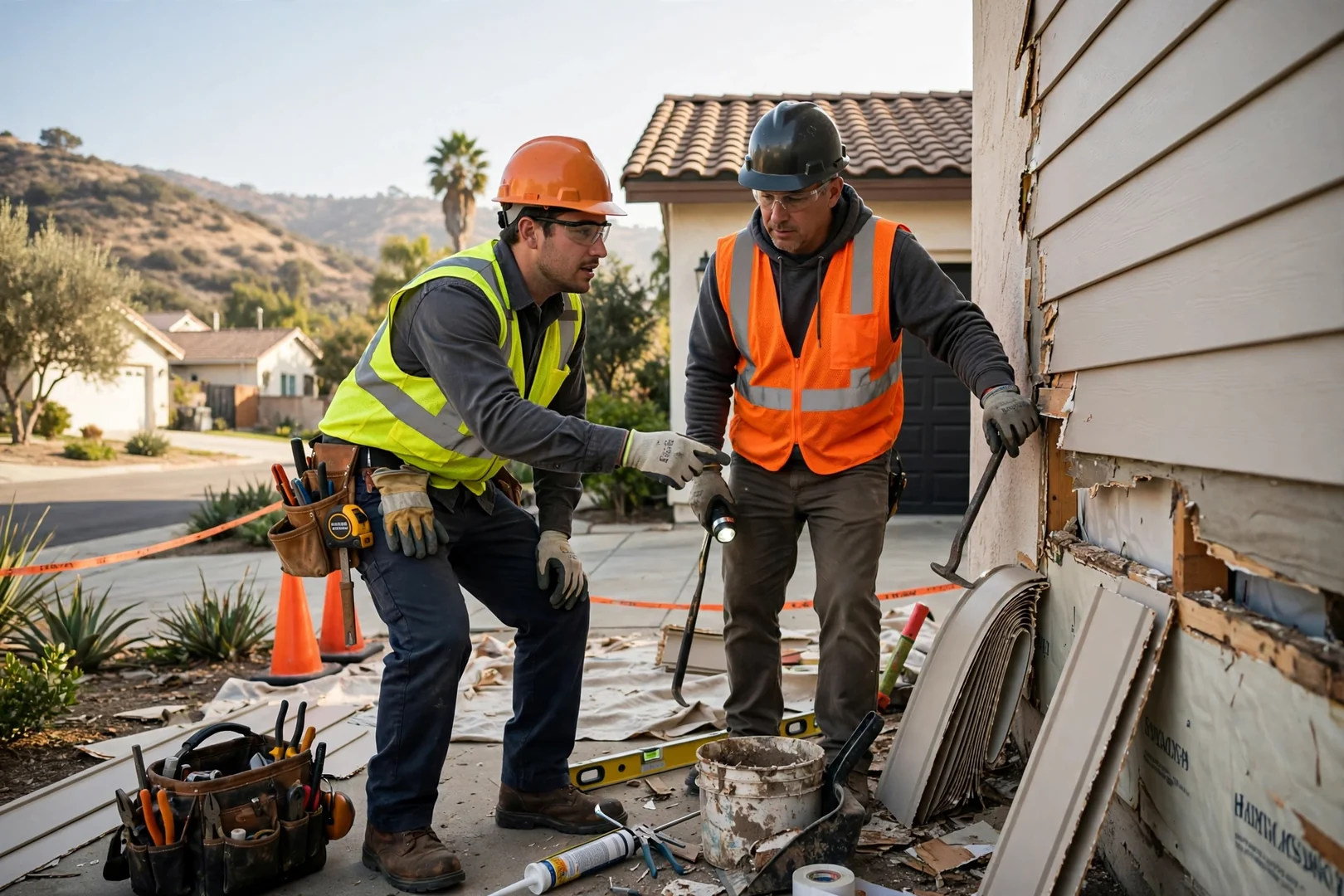
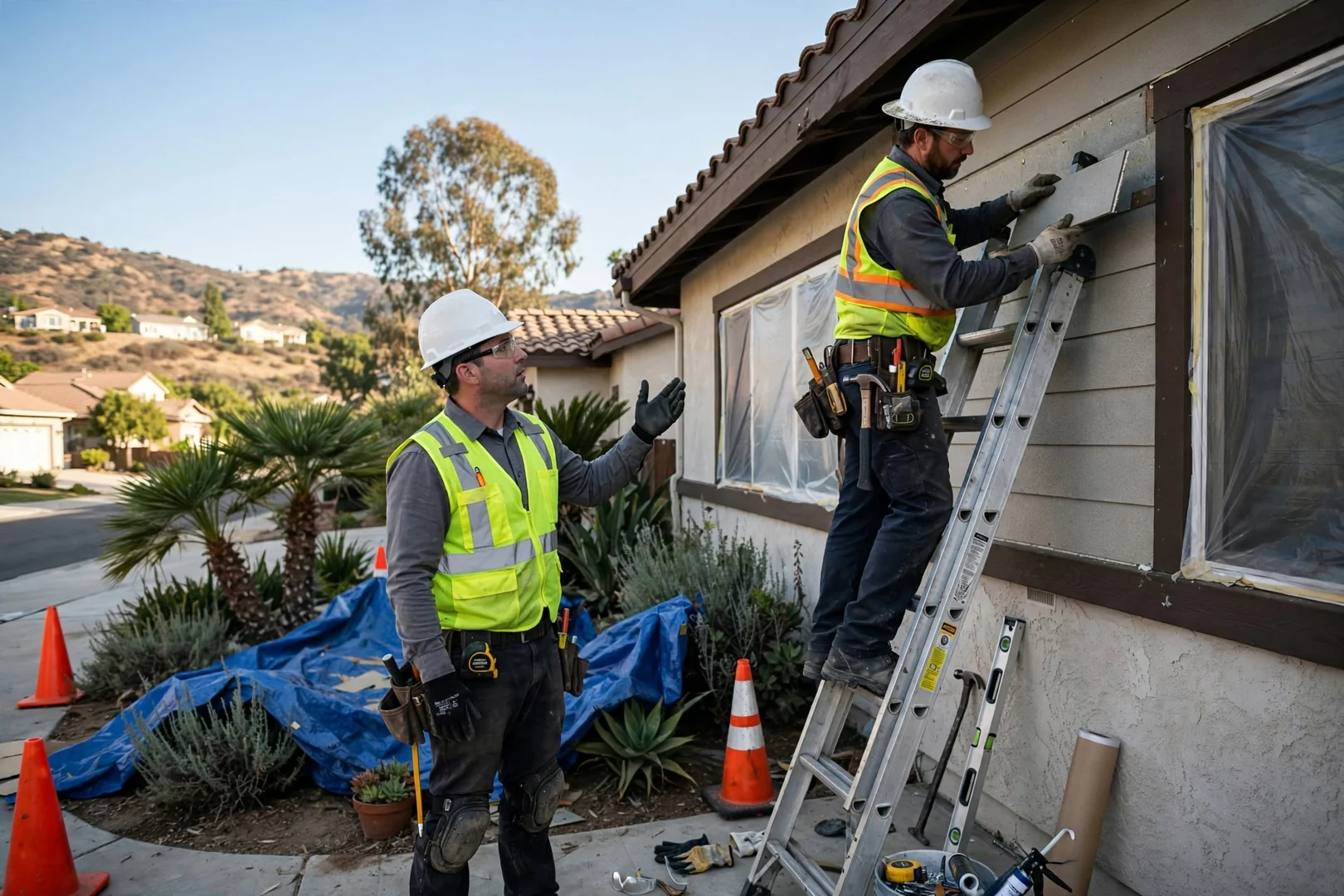
Every crew that pulls up to a Diamond Bar home starts the same way: a walkaround
of the wall assembly, a look at grade clearance and existing flashing, and a written
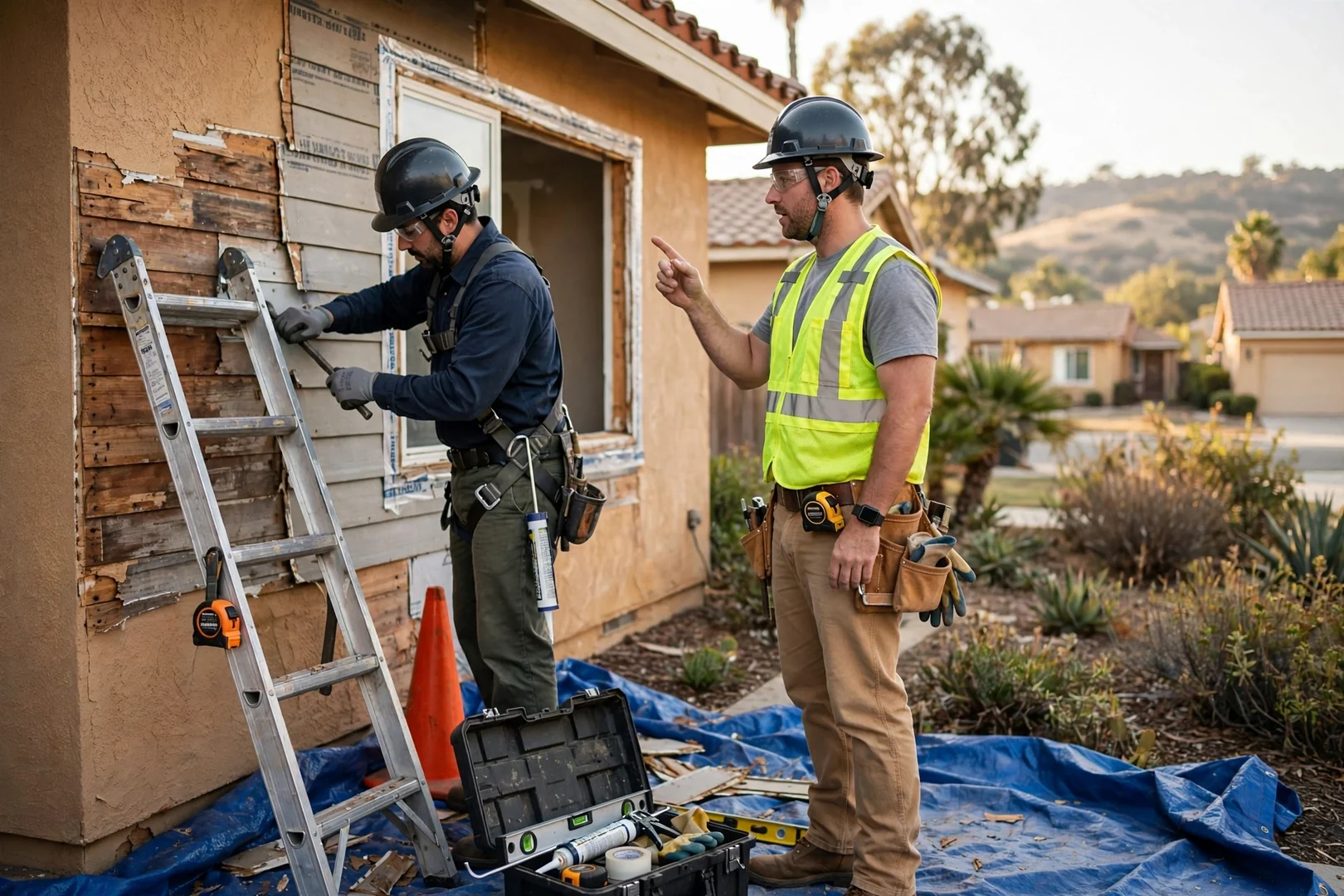
scope the homeowner reviews before a single course comes off. Ladders and scaffold
planks get inspected each morning, and fall-protection gear is checked before
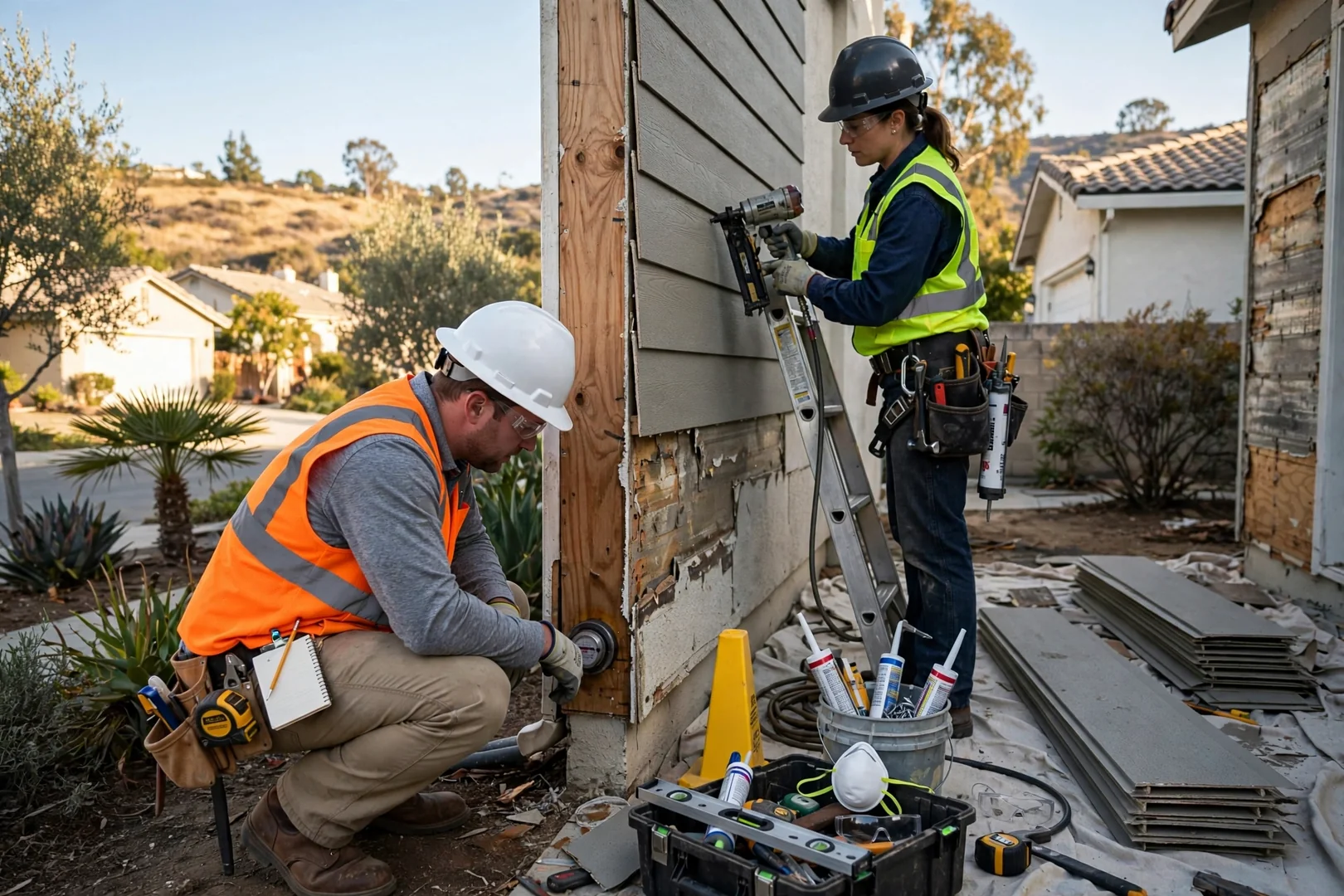
anyone works above the first floor. Cut stations for fiber cement are set up away
from windows and outdoor living areas, with dust collection and respirators used
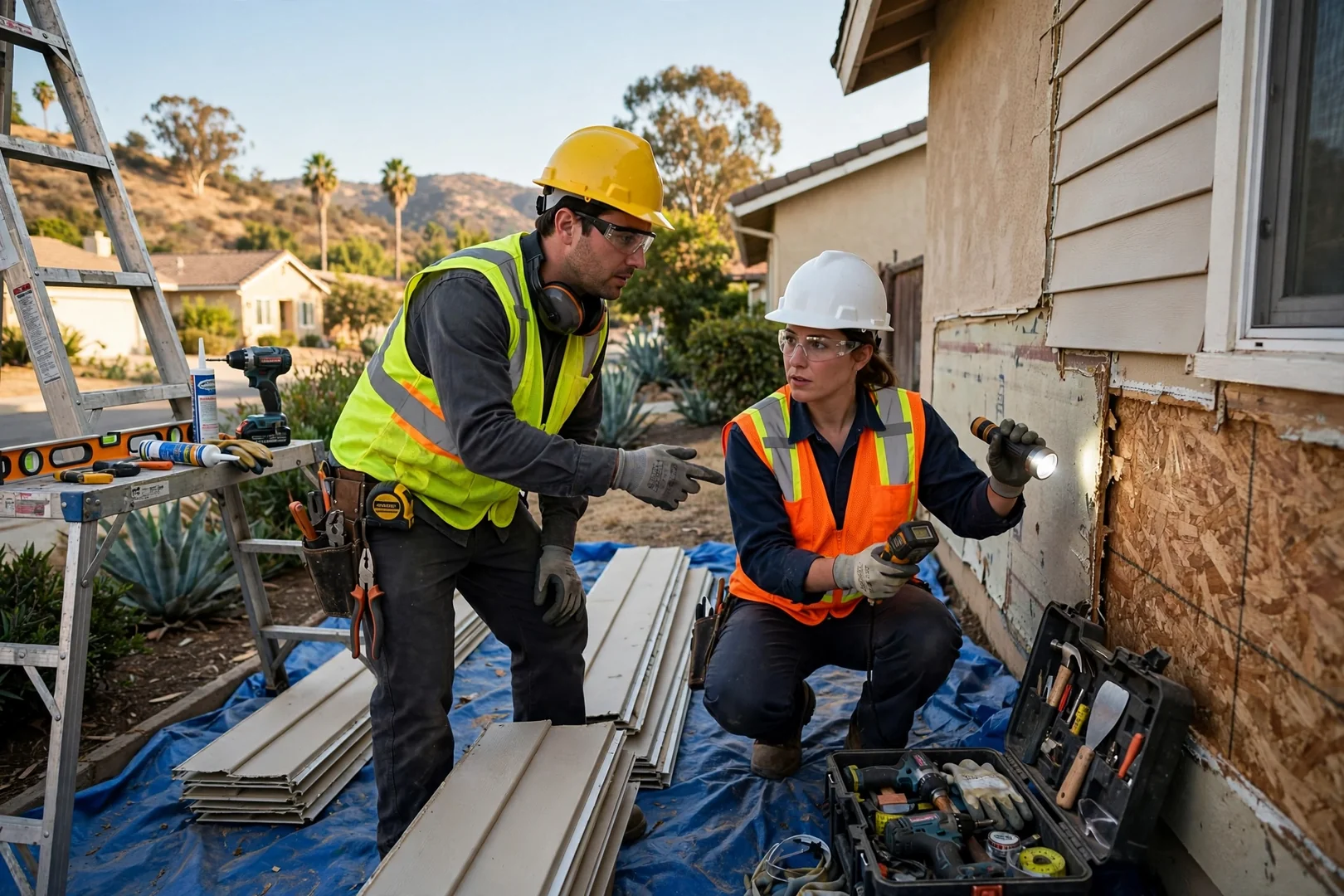
for score-and-snap or shear cutting. We photograph sheathing, weather-resistive
barrier, and any hidden moisture damage we uncover so nothing about the substrate
is a surprise later.
Documentation is part of the job, not an afterthought. Fastener schedules, clearance
dimensions, and flashing details follow current manufacturer installation instructions
and the 2026 code requirements enforced locally, and we keep those product instructions
on site for reference. Trained technicians handle the actual siding installation,
and newer crew members work under supervision until their layout, nailing, and
joint flashing meet our review. Short version: nothing gets covered up until it
passes a look.
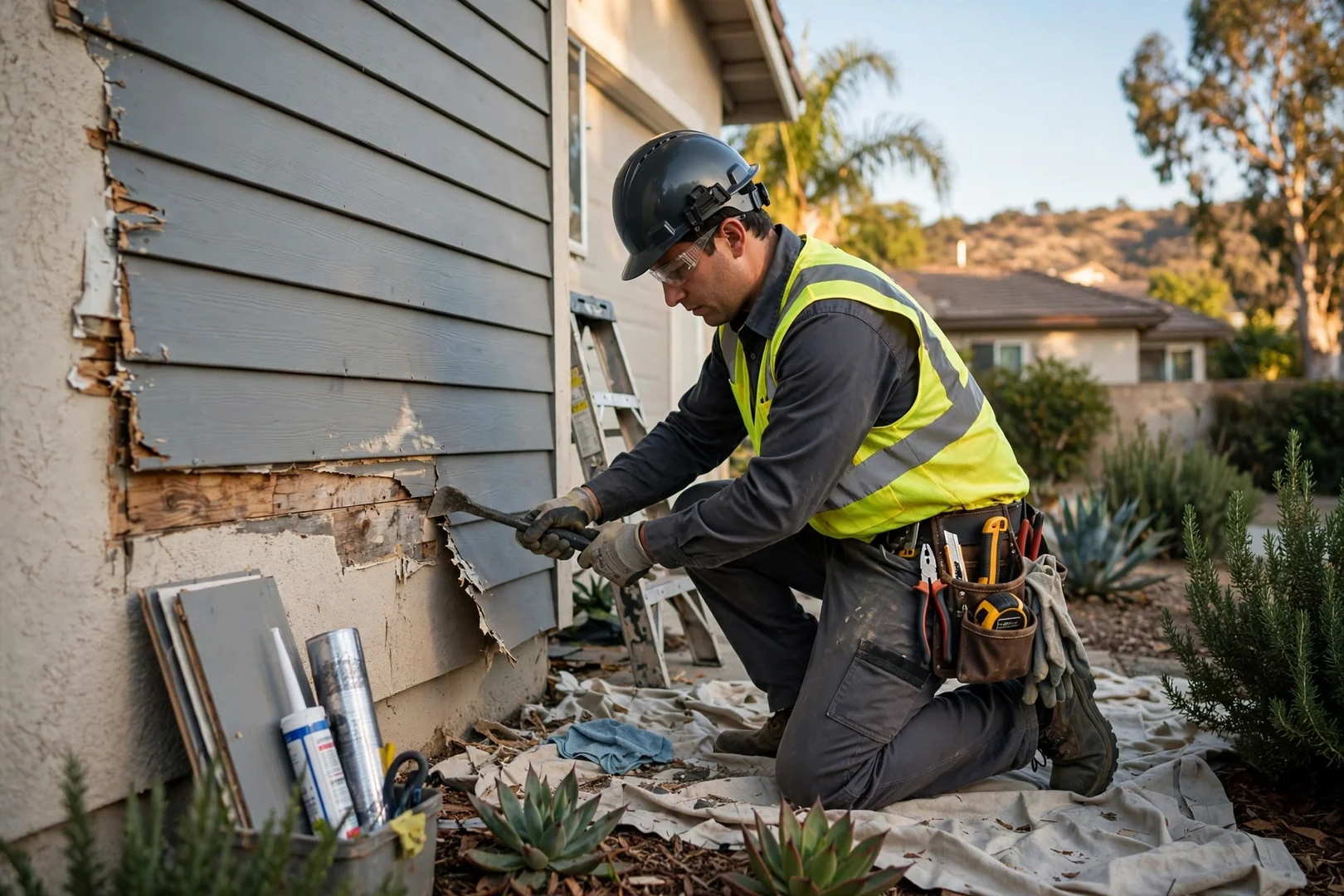
Site protection matters as much as the wall itself. Landscaping and walkways get covered, debris is contained rather than left to scatter across neighboring yards, and fiber cement dust and old material are collected and hauled out at the end of each workday. Power tools are inspected for guarding and cord condition, and pneumatic nailers are pressure-checked so fasteners seat properly instead of overdriving through the nail flange. Before we call a project finished, we walk the perimeter with the homeowner, check caulk joints and trim terminations, and confirm the site is clear and safe.